Fencing Installer Melbourne: Building a Fence That Lasts 20+ Years
An excellent surround Melbourne is never ever just a limit. It's wind security, privacy, pet dog safety, a little visual equilibrium for the road, and usually a maintenance guarantee you make to your future self. When individuals request a fencing installer, they usually mean, "Can you make it right, solid, and not look sad after a couple of seasons?" Fair question.
The fence that stands up for 20+ years is seldom the one with the fanciest appearance. It's the one with the boring fundamentals toenailed: right post sizing, the best embedment deepness for Melbourne dirt and problems, strong repairing, practical drainage, and products matched to the means the weather condition hits your website. I have actually enjoyed fences fall short for factors that were noticeable as soon as you stand back and look at the construction, and I have actually likewise seen fencings soldier on for decades because the installer dealt with the information like they mattered.
If you're preparing a brand-new fencing or changing one that's already swing in the wind, here's the technique I have actually seen job consistently throughout Melbourne backyards, corner great deals, and infill streets.
What "20+ years" really suggests in Melbourne
Long life is not one magic product selection. It's a system. In Melbourne, your fencing needs to deal with a couple of repeating villains:
- repeated wetting and drying from rain and humidity
- coastal wind if you're closer to the bayside
- tree root activity and soil shrink-swell
- impact damages, specifically with children, pet dogs, and garden tools
- algae and surface moisture that can maintain lumbers and layers damp
A fence can be developed from decent materials and still degrade much faster if the posts are incorrect, the concrete is bad, or the panels are taken care of in a way that traps water. Alternatively, a fencing with "typical" products can last a long time when it's set up with the best spaces, proper bolts, and great water drainage logic.
That's why "fence installer Melbourne" is a typical search, yet the more useful inquiry is constantly, "What's your method for articles and supporting?" Articles are the skeleton. Panels are the skin. The majority of fence failures start with the skeleton.
The fence you select is just half the decision
People often tend to concentrate on style initially: paling, fading with kickboard, pickets, paling and latticework, colorbond, or timber slat. Those are important, however the durability conversation shifts when you consider just how the material acts once it's installed.
Timber looks wonderful and can take paint or discolor well, however it demands regard. If the timber is left also reduced to the ground, remains wet near the bottom, or makes use of bad finishings, it will ultimately curl, split, or rot from the ground align. Even "good timber" will certainly have a hard time if water is offered a course to sit in the incorrect places.
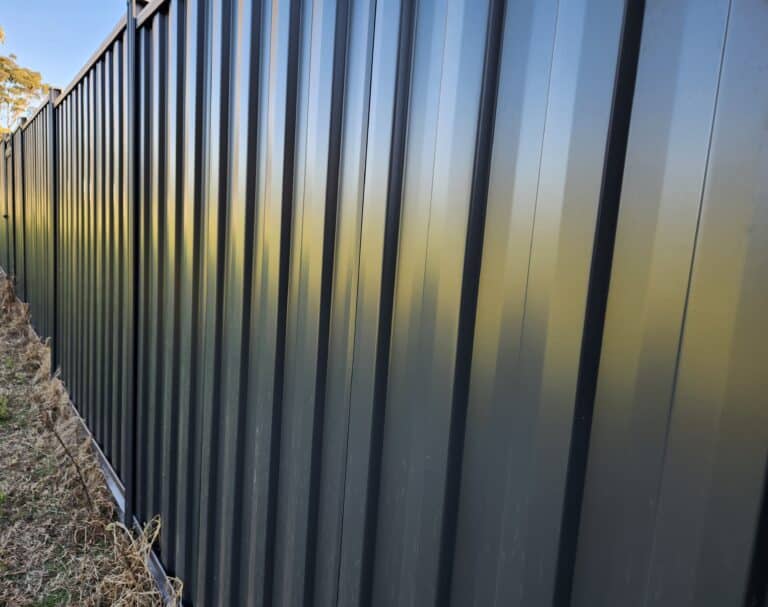
Metal fence, specifically colorbond-style systems, typically deals much better with moist problems, but the details still matter. Inadequately matched fixings, damaged coverings, and inaccurate panel alignment can cause rust beginning at stress points. A fencing that looks penalty on the first day can shed its battle with corrosion if installation leaves scratches or gaps where water works its means in.
Then there's the happy medium, like composite or hardwearing options. They can last well, yet they still need proper ventilation, compatible bolts, and installation that doesn't catch wetness versus components.
When you're speaking with fence installers, ask what they recommend for your details situation, not just "what they usually mount." A side boundary fence a sheltered street can act in a different way from a fencing on a subjected edge where wind slaps it two times as hard.
Posts: the part that determines whether the fencing stands or sways
Let's talk messages, since this is where a great deal of long life is won or lost. The article does 3 jobs at once: it holds the panel weight, it withstands wind stress, and it maintains the fencing line stable over years of dirt motion and small impacts.
A typical installer shortcut is under-sizing blog posts or setting them too shallow due to the fact that it's much faster. Superficial embedment can be okay in particular secure dirts and light fencing tons, but in Melbourne, you'll frequently see ground that shifts sufficient to make "adequate" start wobbling later.
I've stood in yards where a fencing was still standing, yet the posts had actually slowly moved sufficient that evictions no longer locked correctly. That's the traditional "it will certainly be fine for now" result. The fencing isn't failing drastically, it's stopping working silently, and it gets expensive once the entire line requires correction.
A long-life fencing usually utilizes:
- appropriately sized articles for the fencing kind and height
- enough deepness to anchor in secure soil
- bracing that values wind load
- consistent spacing so panels do not obtain overstressed at the weakest point
If an installer is obscure concerning message embedment depth, the concrete mix, or just how they take care of soft ground, that's a red flag. A fencing installer that's done this enough time will certainly speak about these points normally, since they know it's the difference in between a fencing that lasts and a fence that requires attention.
Concrete and drainage: the unglamorous combo
Concrete is often misconstrued. People think more concrete is better, as if it's a fill-and-forget product. Actually, concrete can be both handy and hazardous relying on just how it's used.
A solid post ground aids, yet water monitoring matters also. When articles are sealed in a manner that catches water right against the message, you can develop a moist zone where wood rot or rust accelerates. When the concrete is poorly developed, with gaps or weak placement, the article can clear up erratically. Uneven negotiation develops into imbalance, and imbalance develops into tension on rails and fixings.
Good fence installments take care of drain attentively. That could suggest making certain article spacing and rail alignment do not create a "bucket" effect, or it might imply making sure lumber components are treated and secured in a manner that inhibits water resting along sign up with lines.
I remember dealing with a fencing where the messages were set in strong concrete, yet the rail arrangement caused rainwater to pool behind a lumber kickboard panel. The wood wasn't rotten instantaneously, it degraded progressively, board by board, with the most awful damage beginning exactly where the water sat. Once the fencing line was rebuilt with better air flow and rail positioning, the next boards stayed in great shape.
It's an easy lesson: a fence doesn't fail just because of climate. It stops working because of exactly how climate is guided with the construction.
Rails, shows off, and bracing: keeping the fencing line honest
Many fencings are built with minimal internal framework, especially with specific designs. That can look clean, but it transforms how the fencing deals with side pressures. Wind gusts do not just press the panels, they turn and rack the system. A fence that looks durable in still air can disclose weak point when the wind goes for it for hours.
Rails and struts are what quit panels from coming to be loose, wavy, or misaligned gradually. The objective is not simply to develop a fencing that looks straight today. It's to build one that stays straight after the first hit from a tornado, after someone leans a ladder, after a youngster kicks a round at speed.
In Melbourne, fencing lines additionally handle uneven footing and small ground activity. Bracing helps the framework absorb that rather than transferring stress into rails and correctings till something bends or draws free.
If you're speaking to an estimator, do not only ask, "Just how much per metre?" Ask, "How do you brace this kind of fence?" Fence installers Melbourne customers often get stunned when the bracing changes their cost, but it's one of the most sensible costs you can make if you're going for lengthy solution life.
Fixings and finishes: where long life hides
It's very easy to speak about the fencing product, however the fasteners and coverings are the part that silently figures out whether your fence survives the wet years.
Timber fencings rely on suitable fasteners, great treatment, and a layer system that sticks and withstands wetness. Low-cost or mismatched fasteners can rust, especially when they're in contact with treated timber that has different chemical accounts. Corrosion at the repairing point can loosen up boards progressively, and loosened up boards end up being easy targets for warping and more damage.
Metal fencings count on finish stability. Coatings are resilient, but they're not invincible. If installation leaves deep scrapes, inadequate trimming edges, or fixings placed in ways that focus stress and anxiety, deterioration has a head beginning. Gradually, the fence surface can go from "fine" to "patchy," and as soon as patching begins, you're into maintenance territory.
A fence that lasts 20+ years is usually mounted with attention to:
- correct fastener kind for the product and treatment
- proper torque or driving technique to prevent damaging the bordering components
- coating touch-ups or edge defense where required
- maintaining regular voids that enable panels to breathe
In method, that means a good installer does not rush the finishing stage. They align, gauge, and inspect every couple of panels as opposed to wishing the fencing will certainly "settle" right into place.
Gates: the joint point you ought to not ignore
Gates take the same wind and effect pressures, however they also bring vibrant tons. An entrance is opened, swung, occasionally knocked, and often utilized as a location to lean while people do lawn chores.
The most common gate problems I see aren't significant failings, they're gradual misalignment. The lock obtains more challenging to close. The void transforms a little after tornados. Eventually, eviction scrubs, the joint posts bring extra anxiety, and components begin to function loose.
Gate durability generally depends upon:
- proper post reinforcement where hinge loads concentrate
- correct placement and tension in hardware
- consistent hinge placement and secure taking care of right into rails
- a gateway frame that doesn't rack under wind pressure
If a fencing installer is developing a fence line and deals with eviction as a second thought, you'll notice it later. Eviction is just best fencing installers one of the top places where long-lasting quality exposes itself.
Matching the fence to your yard reality
Not every yard acts like a cool pamphlet photo. Melbourne homes have slopes, driveways, tree origins, soil that really feels firm in one area and soft in one more, and neighbors who might not want heavy visual mass on their side.
A fence installer Melbourne client need to consider how the fence will communicate with the backyard:
If your limit is near mature trees, you're taking care of roots and soil motion. If your backyard inclines, the fence line could need stepping or board elevation adjustments to keep panels lined up without stretching the structure.
If you have lawn sprinklers or water drainage that runs toward the fence, water will certainly collect where it's led. The fence becomes part of the drain tale whether you planned for it or not.
One task I remember included an edge border where the downpipe from the house released near the fence line. The fence didn't just get wet, it got routinely soaked. The installer recommended readjusting the rail clearance and ensuring hardwood elements weren't caught in the damp area. We likewise worked with the home owner on rerouting a downpipe outlet. The fence still required paint touch-ups down the track, but it didn't collapse into rot like the previous variation had.
Those "site realities" are why a one-size-fits-all technique is risky.
The site check that separates good fence installers from rapid ones
Before any type of major fencing installment, a good staff does an appropriate website check. Not simply a fast eye the fence line, but a consider what will certainly impact the build.
You desire them to consider:
- the border format and any type of existing structures
- the ground problems where messages will be set
- the most likely wind exposure for your site
- where gateways and access factors rest about the fencing line
- how you desire the fencing to look once it settles, not just on installation day
If someone can't be troubled to take a look at these information, the fencing may still get custom fence installation company developed swiftly, however "quick" and "20+ years" rarely go together.
What to ask prior to you work with a fencing installer
You can conserve on your own time and future frustrations by asking the right inquiries in advance. Right here's a short list of what I recommend you ask, because these answers tell you how the installer considers durability and quality.
- What article dimension and embedment deepness do you make use of for this fence height and style?
- How do you take care of supporting on long runs and on corners?
- What bolts do you utilize and why are they the ideal match for the materials?
- How do you take care of water around the base of the articles and along the rails?
- What's your strategy for entrance placement and hinge reinforcement?
Good fence installers Melbourne will generally answer clearly. If their solutions are unclear, count on "believe me," or stay clear of specifics about posts and correctings, that's an indication to maintain shopping.
A useful pointer: ask to see a similar fencing they set up recently, especially one that has actually gone through at the very least a couple of periods of weather condition. Also without excellent exposure right into "year five," you'll find out a great deal regarding straightness, panel spacing consistency, and just how neat the ending up looks.
The mount process, without the mystery
People think of fencing like putting together a package. In truth, the procedure is component measurement, part carpentry, component concrete job, and component mindful alignment.
A long-life installation typically relocates similar to this: setting out the line, verifying the format, taking care of levels and blockages, after that setting articles with cautious attention to placement and stability. Once blog posts are set, rails go in with straight dimension checks so the panel line stays consistent.
The ending up stage matters too. Discoloration or paint lumber should adhere to proper prep and suitable timing. Metal elements must be fitted easily, with focus to sides and fixings.
If you're hiring fence installers Melbourne broad, you'll see differences in pacing. Some staffs run with, leaving the finish a bit rough. Others reduce for the last 10 percent, the alignment and tidying that makes the fencing look excellent and remain stable.
You can be kicked back as a consumer, but don't be passive. Expect straightness as the fencing takes shape. Procedure a couple of factors if you wish to, however also an aesthetic check can expose whether the line is drifting.
Maintenance still matters, even for a "long-life" fence
Here's the reality: 20+ years doesn't indicate "never ever touch it." It suggests the fence is built with enough durability that maintenance remains periodic instead of constant.
Timber fences generally need routine re-coating. The regularity depends on sunlight direct exposure, layer high quality, and how much moisture rests against the boards. If you keep top of it prior to the finish stops working, you get years. If you wait up until wood is deeply weathered, you're paying for replacement sooner.
Metal fencings can require cleaning and touch-up in locations that obtain damaged or where rust starts in pin areas. Once again, early interest defeats reactive repairs.
The smartest upkeep is additionally the most basic: keep vegetation cut so it doesn't keep the fencing damp, examine entrance hinges after heavy storms, and try to find very early signs like loose fixings or boards that are pulling away by a couple of millimetres.
If you desire a fence to last, you treat it like a structure, not like furniture.
Common fencing failing patterns I maintain seeing
Most failures leave ideas. Here are a couple of patterns I see again and again when I assess older fencings or repair. The details differ, yet the root causes are surprisingly consistent.
- Posts leaning as a result of shallow embedment or soft soil settling
- Panels sagging due to the fact that rails or braces were under-specified for wind loading
- Timber rot starting at the ground line or caught moisture zones
- Gate equipment loosening due to the fact that hinge reinforcement wasn't adequate
- Corrosion beginning at taking care of points where coatings were harmed or mismatched fasteners were used
If you're replacing a fence, the old one can tell you what happened. Do not just replace the very same design. Determine why the previous fence didn't last, then make sure your new fencing installer remedies those weak points.
Choosing a fence installer Melbourne service providers in fact appreciate functioning with
A fencing setup is stressful just when something goes wrong or communication obtains messy. The most effective installers tend to run a tidy job website and keep things clear.
You'll generally feel it in:
- how they validate dimensions and explain changes
- whether they show up when scheduled
- how they handle waste and wood offcuts
- how they shield existing plants and yard features
- whether they clean up and leave gates working smoothly
If you've ever worked with a trade and invested the whole time looking for details, you understand what I suggest. Long-life fences are developed when the installer takes pride in getting points right, not simply in finishing fast.
A sensible "ideal technique" for longevity
If you seek the simplest path to a fence that stands up for years, it usually comes down to a couple of sensible decisions done well.
The initially is selecting a fencing design you can maintain without bitterness. The 2nd is matching product and finish choices to your exposure. The third is declining to cut edges on posts, supporting, and fixings.
Here's a second brief checklist I use when I'm advising property owners that want a long lasting result but don't wish to overpay for unnecessary extras.
- Ensure the fence posts are correctly sized and set, especially on edges and long runs.
- Choose supporting that fits wind direct exposure, not simply the fence elevation on a calm day.
- Use suitable bolts and proper coating systems for the material and climate.
- Plan for water flow, including lawn sprinkler overspray and downpipe placement.
- Treat gateway hardware as structural, not decorative.
Do those things, and you're piling the chances greatly in your favour.
Final ideas from the toolshed
I don't believe fences need to really feel breakable. If you're paying for a fence installer, you should have a structure that looks great and stays that way with Melbourne's mix of storms, droughts, and seasonal growth in your garden.
A fencing installer Melbourne customer gets the very best results when they select a specialist that talks particularly about blog posts, water drainage, supporting, and fixings. Design issues, but sturdiness comes from the choices that don't appear in images, the ones you just discover when something is developed inadequately and starts to move.
If you're intending your fence substitute quickly, take your time with the shortlist, ask the concerns that expose technique, and take note of just how the installer considers the site. That's the distinction between a fencing you endure and a fence you ignore, since it's still doing its job years later. Which's what "20+ years" is really all about.